About Me:
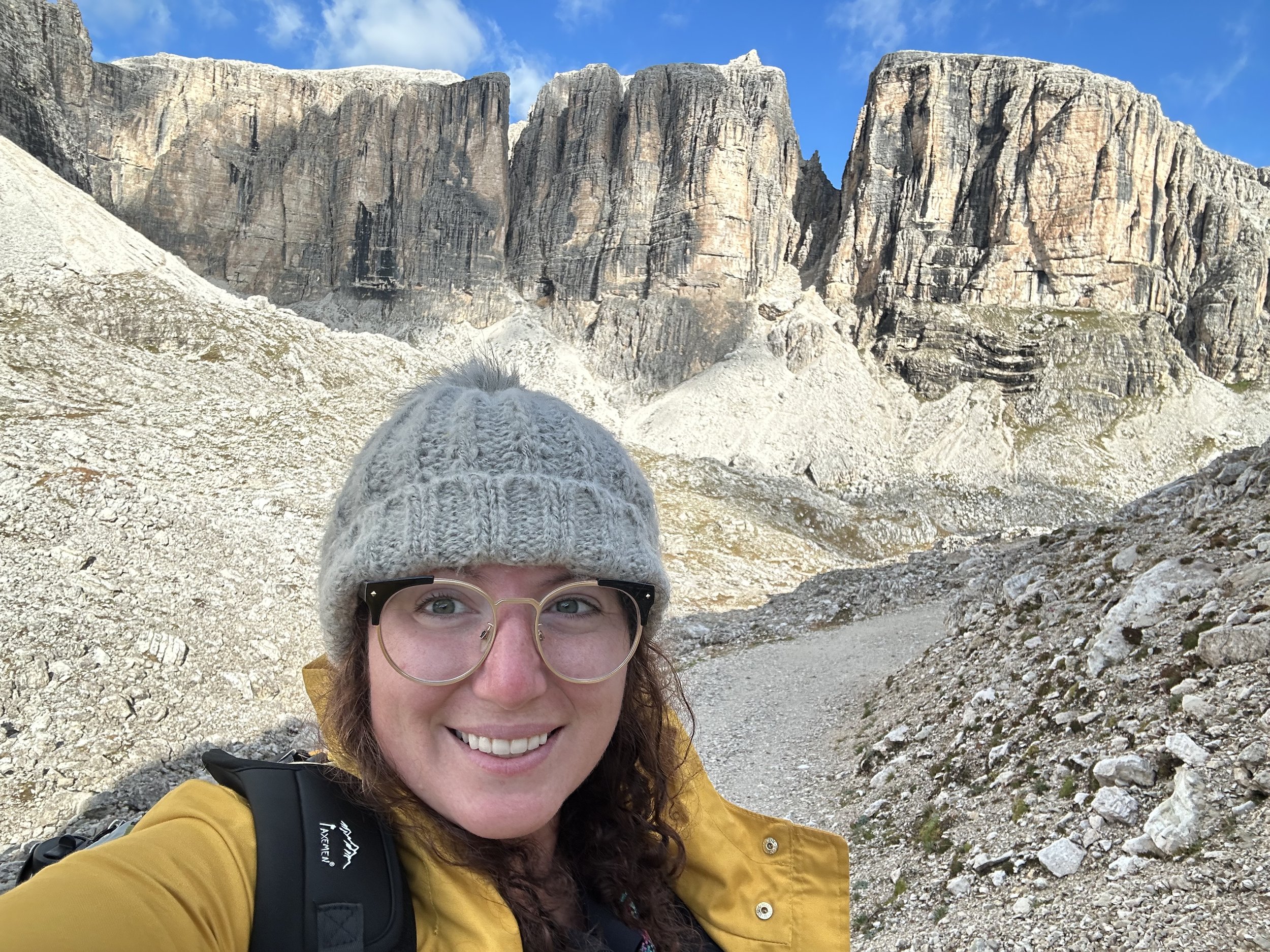
I am, at heart, a wonder junkie.
I have been writing for most of my life, and something about poetry in particular captivates me. Maybe it is the way it blends music, visual art, and written language. I also love how flexible it is—long or short, narrative, thesis-defending, or painting a picture; formal or experimental. Poetry holds it all.
I use the written word to make sense of and give shape to my thoughts and the world. I write as a refuge and out of necessity. I’m drawn to liminal places—the in-between. Twilight, transatlantic flights, the seashore. Sometimes I feel most at home in these spaces and savor the time I spend there. Other times, I find them unsettling and alienating, and I’m fascinated by them all the more because of it. I live in the tension of calling two different countries home, with all the complexity that entails. All of us do this, in some way: we grapple with our light and our shadows, our beliefs, our experiences, our expectations.
I’m captivated by where science, spirituality, myth, the physical world, and imagination meet. Scientific inquiry feels deeply poetic to me. A poet’s work is to notice—and not just notice, but make connections, test findings, and present them anew. A scientist also observes closely, tests theories, and presents results. Both seek to bring us a clearer or deeper understanding of the world. Much of my writing begins in fragments: notes gathered on walks, observations, and small moments that return later in unexpected ways.
I’m curious about mycelium networks that connect trees in forests, the shifting light patterns of fireflies, mineral formation, the history of place names, lunar missions, the Romantics, how passing certain places always triggers the same thought, and the way friendship can spark instantly between people. And then, the way all these things connect: to one another and to me. I’m thankful that there will always be more to discover.
I hope my work invites others into that same sense of wonder—into their own bright constellation of curiosity, connection, and discovery.
Constellations of interest
What my work explores:
Wild and liminal places
Light, color, and perception
The connections between scientific and spiritual ways of knowing
Memory, place, and the way experience lives in the body
Curiosity, attention, and discovery
The ever-shifting concept of home
What it means to find wonder in a broken yet beautiful world
The necessity of imagination
Q & A:
What do you return to when you feel stuck?I am the kind of person who has many interests and enthusiasms, and I’m drawn to a range of creative practices. When I feel stuck, burnt out, overwhelmed, or restless, I often need a change of creative mode—photography on a walk, glass lampworking, watercolor painting, sketching on location, collecting pigments and making my own paint, pottery, fiber work, baking, planting flowers. These activities use different parts of my mind.
Getting outside always helps. Walking, in particular, has a way of loosening things. I’m often surprised by how many ideas come to me when I’m out on a walk.
I also return to reading widely and listening to science podcasts, which help me reconnect with curiosity.
What draws you to writing prompts?Writing prompts can be a helpful way to break out of my own thought loops. We all experience them at times—when it feels like everything we’re thinking is circling the same ideas, or when we want to write but can’t quite get onto the page.
Writing prompts have been especially helpful to me since my TBI. During my recovery, they’ve often provided a way to begin putting words down again. Guided exercises, in particular, can offer just enough structure to move from brain fog into clarity. It doesn’t always matter whether I follow the prompt exactly—what matters is having a starting point that helps me begin.
What kind of writer are you on a difficult day?On a difficult day, my writing might only look like a couple of small notes, or nothing at all. Sometimes life gets in the way, or I simply don’t have the headspace to write. But life itself is full of ingredients for good writing, and sometimes the best thing I can do is be attentive to the moment. Often those moments become unexpected gifts when I return to the page.